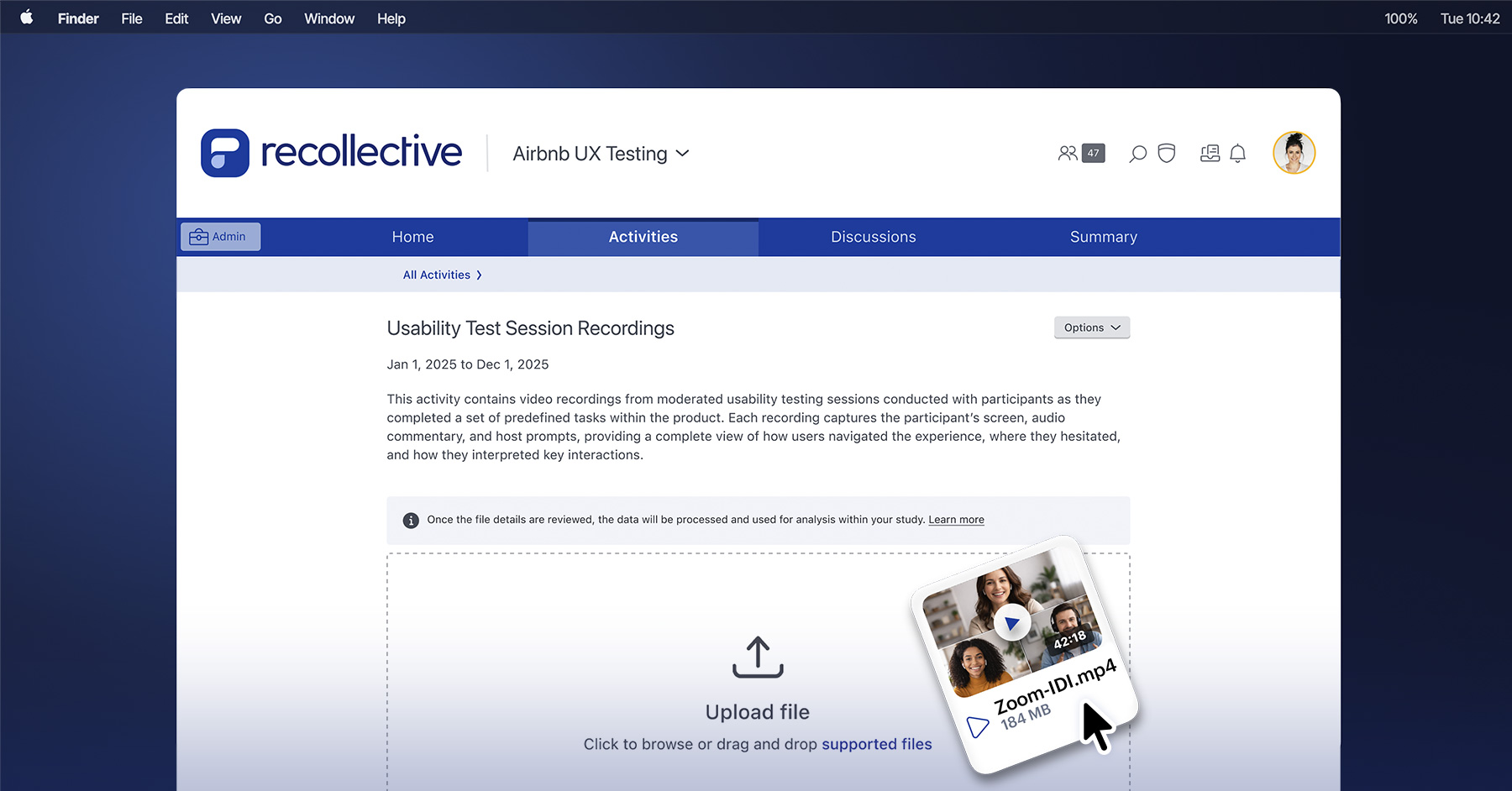
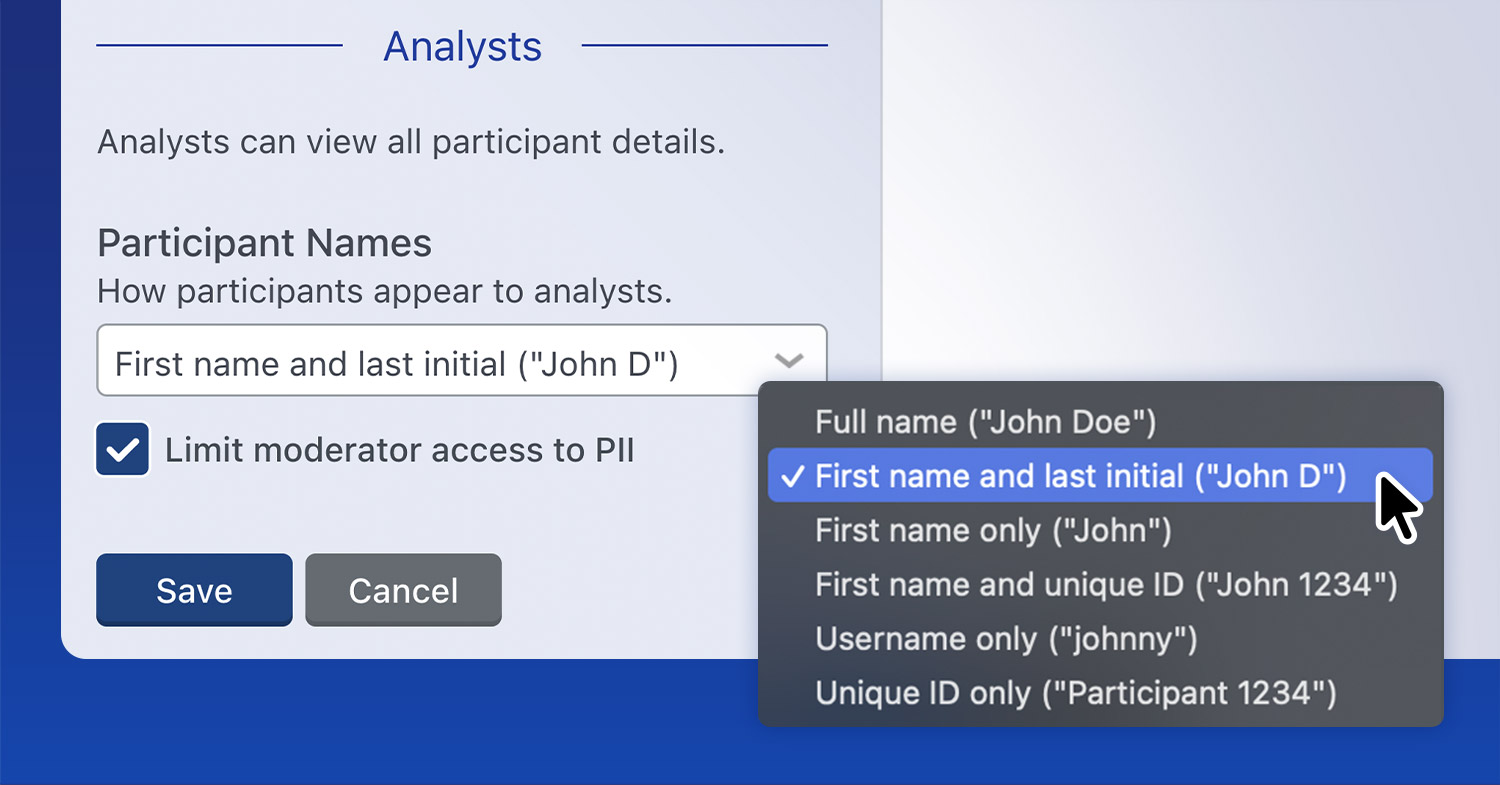
AI has quietly changed the math on short-term qual research. Running a study with 300, 500 or even 1,000 participants used to mean drowning in data. Analysis alone could take weeks. Today, with the right platform and the right tools, a researcher can field a rich, multi-method qual study in a single sitting and have a stakeholder-ready story in a fraction of the time it would have taken just two years ago.
Beyond the Long-Term Community: Knowing When to Choose Differently
Ongoing insight communities earn their place. Quick access to an engaged panel, a growing history of contributions, a genuine relationship between a brand and its customers: the value compounds over time for teams that can invest in the setup and maintain the momentum.
But not every research initiative calls for that level of commitment. A product team needs answers in two weeks, not two months. An agency is scoping a new methodology for a client pitch. An in-house researcher wants to stress-test a creative concept with real participants before a campaign goes live. In each case, the long-term community model either isn't feasible or is simply more than the initiative requires.
This is where short-term qual at scale fills the gap, and where AI has made it genuinely worth pursuing.

Designing for Depth in a Single Sitting
The design principle here is straightforward: take what makes surveys scalable and what makes qual rich, and build something that delivers both.
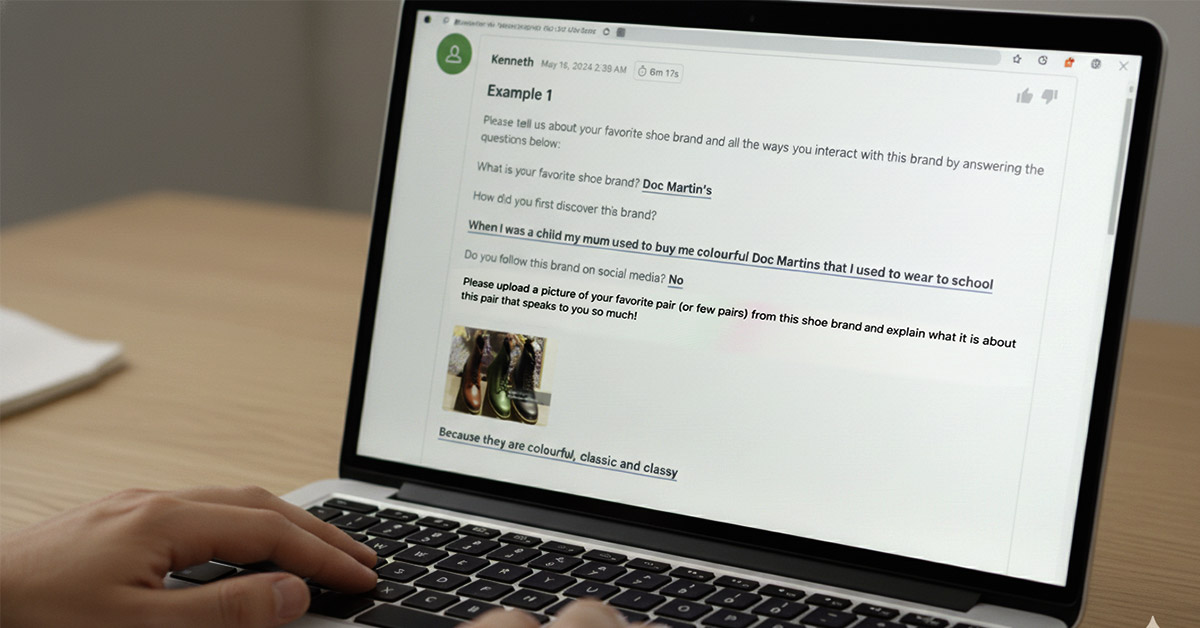
In practice, this means strategically pairing close-ended questions with the rich open-ended formats available within an online qualitative research platform; the close-ended questions act as the anchor for analysis from which nuance is derived from the associated qualitative depth. Video responses, photo uploads, audio prompts and written reflections generate the kind of data that reveals how participants actually think and feel, not just what they say when given a multiple choice option. Hybrid formats like Sort and Rank or Image Review add another dimension, asking participants to prioritize and react rather than just answer. Layer in scales and polls where you need structured data, and you have a study that works analytically from multiple angles while giving participants something genuinely worth their attention.
There's a practical benefit here beyond data quality: richer response formats are better at filtering out bad actors. A participant who isn't who they claim to be, or who is rushing through without engaging, tends to reveal themselves quickly when asked to record a video or describe what they see in an image. At scale, that matters.
For agency researchers fielding multi-method projects under client timelines, this approach also opens up a compelling conversation: a methodology that delivers qual depth with near-survey scale is something worth putting in a proposal. A single project can deliver quantitative certainty where needed to explicitly express discrete participant preferences, plus the richness to nuance and understand those choices.

Analysis at the Speed of the Story
This is where the approach pays off most clearly, and where Recollective Ask AI changes what's possible.
Closed-ended responses surface immediately as charts: no manual tabulation, no waiting. The quantitative layer of the study is ready to explore the moment fieldwork closes. But it's the qualitative layer where the real story lives, and historically that's where scale has been the problem. Reading and coding hundreds or thousands of open-ended responses manually isn't just time-consuming; it introduces inconsistency and limits how many people on the team can actually engage with the data.
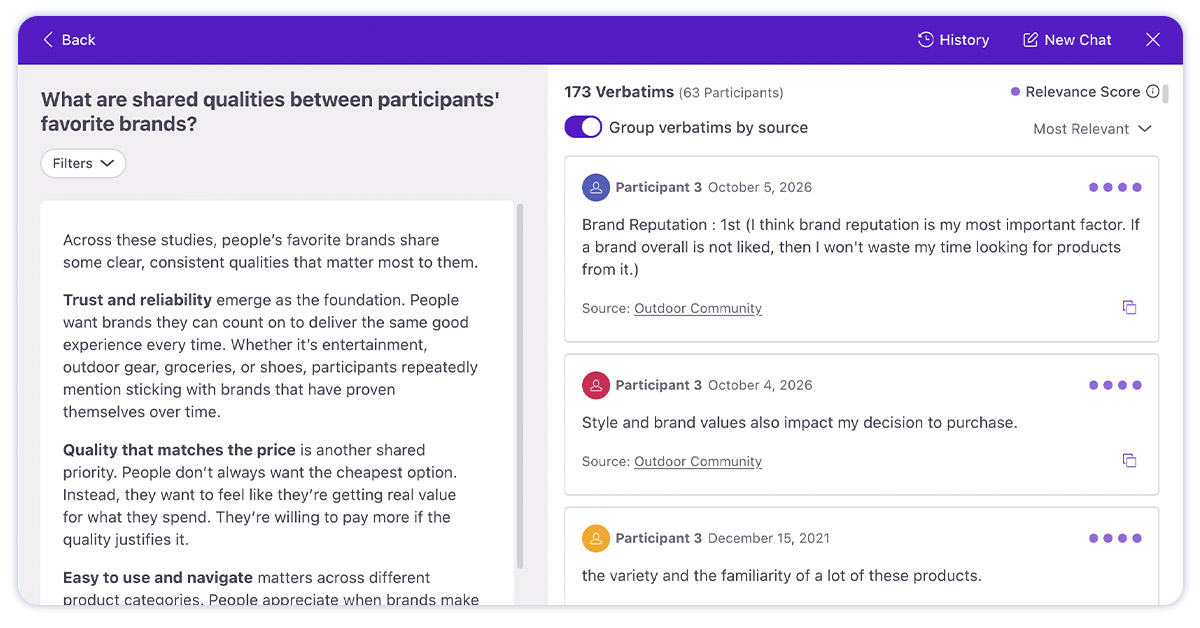
Recollective Ask AI addresses this directly with AI qualitative data analysis. It analyzes open-ended responses to surface themes, categories, sentiments and emotions, giving researchers a structured starting point rather than a blank page. More importantly, it lets analysts ask targeted questions directly to the data: What concerns did participants raise about price? How did responses differ between participants who use the product weekly versus occasionally? The AI surfaces relevant responses and provides a direct answer, with participant verbatims to verify it.
The key phrase there is "starting point." Recollective Ask AI accelerates the pattern-recognition work that takes hours manually. The interpretive work — deciding what a finding means, what story to tell, what the client needs to hear — that remains the researcher's. The platform clears the runway; the analyst does the flying.
Opening the Data to Stakeholders
One of the less-discussed advantages of this approach is what happens after the analysis is done, or rather, alongside it.
Because the data is structured and explorable within the platform, there's no reason to keep it locked down until a final report is ready. Stakeholders who want to engage with the findings can do so on their own terms. A product manager curious about a specific theme can navigate to that section of the data and explore it directly. An executive who saw a stat in a summary can pull the verbatims behind it in minutes. A brand team member who wants to understand how a particular segment responded doesn't need to wait for a researcher to run a separate cut.
The workflow looks something like this: a stakeholder starts with the charts for a high-level view of the quantitative results. Something catches their attention, like a notable spike in one response category. They move into Recollective Ask AI to explore the open-ended data around that category, see the themes that emerged and pull the participant quotes that support or complicate the picture. They leave the session with a specific, substantiated point of view, not just a sense that "the research showed something interesting."
For in-house insights teams, this matters beyond convenience. When stakeholders can engage directly with the evidence behind a finding, the insights function stops being a black box. Findings become something people across the organization can interrogate, cite and build on; it allows stakeholders to develop a more intimate understanding of the results above and beyond what can be learned from simply reading a report.
Moving From Hindsight to Foresight with Predictive Mode
The value of opening this data to stakeholders goes beyond understanding the immediate research objective. When stakeholders can interact directly with the data, they can begin framing and stress-testing the business challenges they expect to see on the horizon.
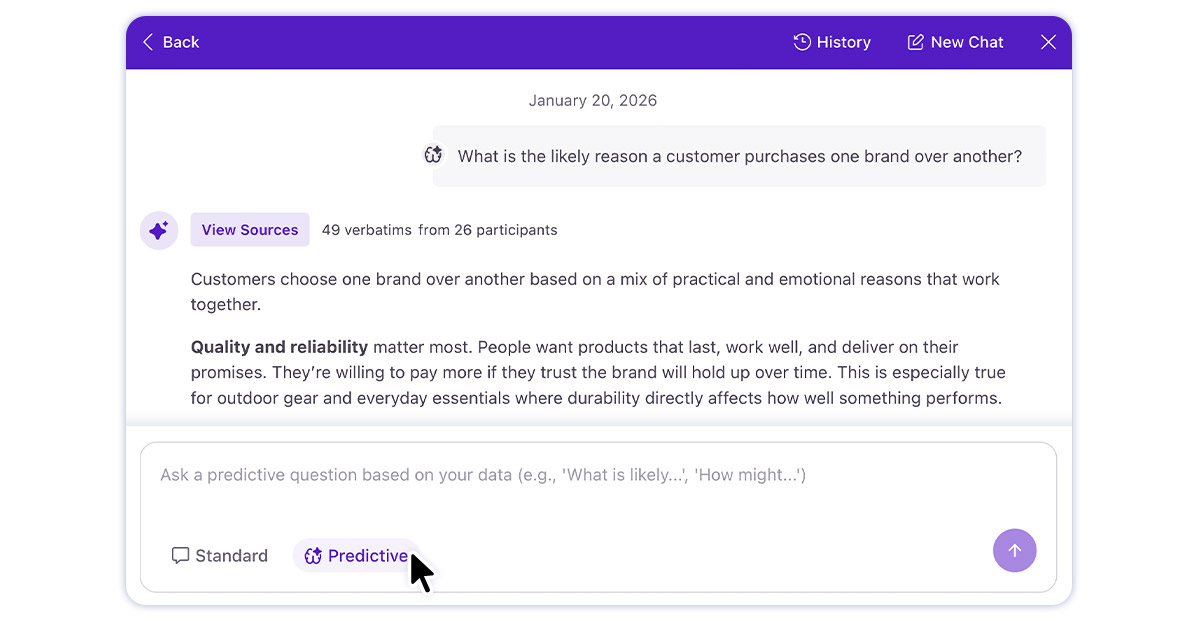
This is where Recollective Ask AI’s Predictive Mode transforms short-term qual data from a historical record into a forward-looking toolkit.
Instead of just analyzing what participants have said, stakeholders can use the existing qualitative data patterns to model what participants might say next. It allows teams to move from insight to foresight in a few ways:
- Stress-Test "What-If" Scenarios: A product or brand team can run hypothetical scenarios against the study data to validate assumptions, anticipate risks, and test future strategic directions without the added cost or time of launching a new study.
- Spot Emerging Shifts Early: By exploring probable sentiments, preferences, and behaviors grounded in real study data, stakeholders can better anticipate future market needs and reduce surprises.
- Build Evidence-Backed Hypotheticals: Because these predicted responses are modeled directly from patterns in the existing feedback, they come with transparent supporting source content. Teams can instantly judge the confidence and fit of the prediction.
From Analysis to Alignment
Short-term qual at scale isn't a workaround, it's a legitimate methodology that's become significantly more powerful as the analysis side of the equation has caught up to the data collection side.
If you're looking to run a large-scale qual study without the long-term community commitment, we'd be glad to show you how it works in practice. Book a demo