

By now, the research industry has embraced the value of online communities and continues to push boundaries as qualitative research scales, driven by advances in technology, including AI.
But moving beyond one-off studies and smaller base sizes raises a bigger question: how do you support ongoing learning and ensure success when the scale itself can feel intimidating or unmanageable?
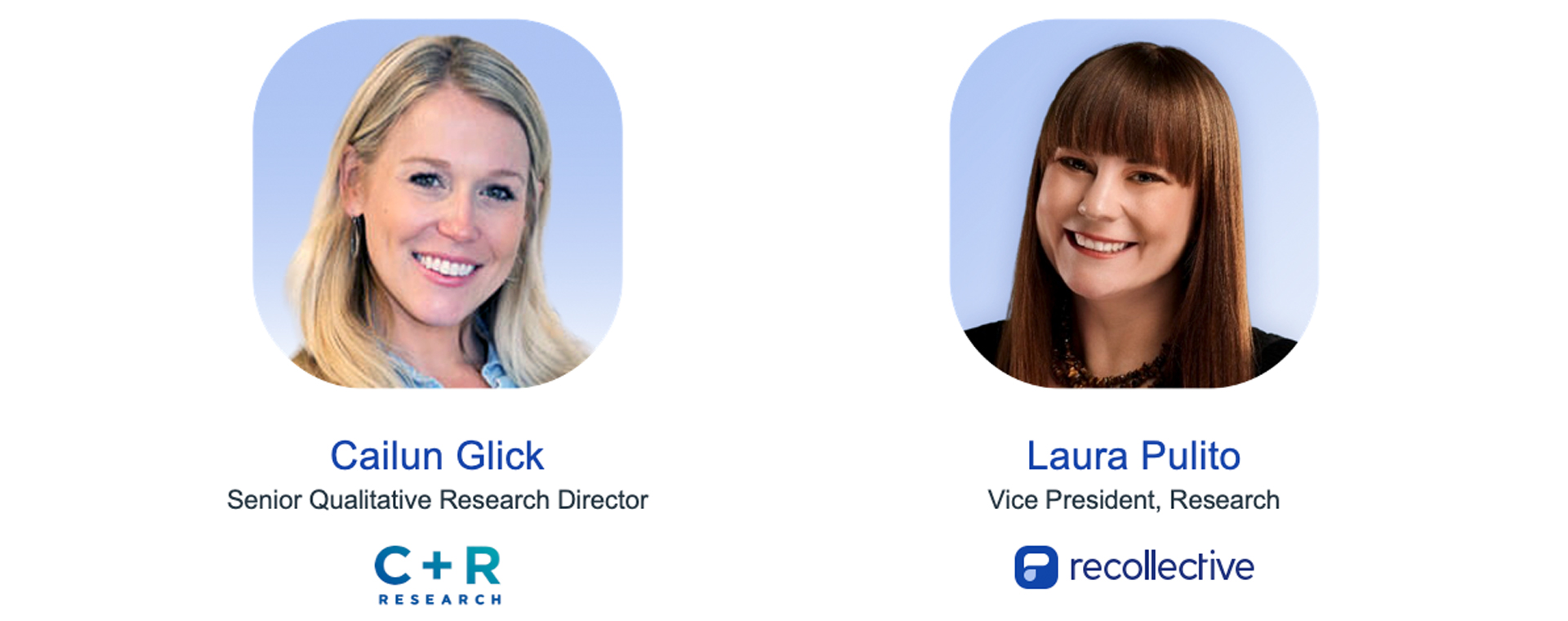
This week, Cailun Glick, Senior Qualitative Research Director at C+R Research, and Laura Pulito, VP of Research at Recollective, hosted a session exploring exactly that. Together, they walked through what it takes to engage 50,000 participants in a single, always-on insights community while still delivering the depth and nuance researchers expect from qualitative work.
If you missed the live event, the recording is available on demand.
The Challenge

The program began with a clear but complex research request.
C+R’s client wanted an always-on way to understand both their customers and broader category users. They needed to support ongoing learning while also reacting quickly to new ideas, products and business questions. That meant combining quantitative and qualitative approaches, managing branded and blind audiences and operating at a scale most qualitative programs could never handle in the past.
The solution also needed to integrate with existing CRM processes, support long-term recontact and feel intuitive for participants. The goal was not scale for scale’s sake, but scale with structure, flexibility and depth.
Why Connect?
Given the scope of the request, a traditional community setup was not enough.
With 50,000 participants, C+R needed a centralized hub that could support a large and diverse audience without fragmenting participants or data across tools. Recollective Connect provided that foundation by creating a single, always-on environment where participants could be managed, segmented and reengaged over time.
Connect also allowed the team to maintain flexibility in how research was designed and executed. It did not dictate methodology. Instead, it enabled C+R to lead with the right approach for each objective, whether that meant quick-turn quantitative work, deeper qualitative exploration or a combination of both.
Participants experienced everything through one familiar interface, while researchers had a single environment to execute projects, manage audiences and support long-term engagement seamlessly.
At this scale, having a stable home for engagement was not optional. It was what made the program manageable, sustainable and successful.
Essential Technology & Tools
Once the foundation was in place, the focus shifted to how the program came to life day to day. While Connect served as the backbone of the project, several tools played a critical role in supporting the research without sacrificing depth or quality.
Recollective Qual
Qualitative exploration remained essential. Insight communities powered by Recollective made it possible to go beyond surface-level feedback and understand motivations, behaviors and context. Participants could engage asynchronously or in live settings, supporting reflection as well as real-time interaction when deeper exploration was needed.
Recollective AI
Recollective’s built-in AI tools supported analysis, efficiency and discovery across the program. Automated summaries, transcription and AI-assisted exploration helped teams navigate large volumes of data and surface patterns faster, making it easier to respond to stakeholder questions while staying grounded in the underlying research.
External integrations
External integrations expanded what the community could support. Quantitative tools could be embedded directly into the participant experience, allowing surveys and other methods to live alongside qualitative work. This ensured the right tool could be used for each objective without disrupting the participant journey.
How this changed the game for C+R
Taken together, these capabilities reshaped how C+R approached large-scale, ongoing research.
The team gained greater flexibility and a broader set of options for designing studies. The community became a true launching pad for projects, allowing research to spin up quickly without starting from scratch. Just as importantly, the experience remained seamless for both researchers and participants, even as complexity increased.
It also expanded how the team thought about what qualitative research at scale could look like and reinforced that this approach is not only possible but sustainable moving forward.
Client impact
For C+R’s client, the benefits were tangible.
They gained faster access to the right participants, with the ability to engage specific audiences as questions emerged. Engagement became more consistent and reliable over time, helping the community feel familiar rather than transactional. Most importantly, the program supported a deeper connection between the brand and its core audience.
Looking ahead
There are clear opportunities to continue expanding customization and scale, particularly for organizations with existing panels that do not yet have a true home. Programs like this open the door to migrating those audiences into communities that support richer, more sustained engagement.
For Recollective, this work reinforces an ongoing focus on pushing the boundaries of qualitative research, building tools that support deeper understanding, greater flexibility and new ways of connecting with people. What comes next is about continuing to pair human curiosity with technology in ways that make meaningful research more accessible.
It does not stop there
The live Q&A extended the conversation even further, offering practical guidance and important context around what it really takes to maintain a program like this over time.
If you are thinking about scale or already navigating it, watch the full recording to learn:
- What the recruitment process looked like to reach 50,000 participants
- Strategies to onboard and keep a large community engaged over time
- How to staff and structure teams to support qualitative research at scale
- Best practices for managing and making sense of the data collected
- How to incentivize participants in a way that drives engagement without blowing the budget
Watch the full webinar





.svg)