The Math Problem Qualitative Research Can't Solve Alone
The math behind qualitative research has never worked in the researcher's favor. A skilled moderator can realistically conduct four to six interviews in a day. Over a one- or two-week fielding period, assuming recruiting goes smoothly, calendars cooperate and nothing gets pushed, that lands around 30 to 45 sessions. Add multiple audience segments, additional markets or different product lines, and the numbers stop adding up fast.
Researchers deal with this by making smart trade-offs. Cut a segment. Reduce sample in one market to make room for another. Shorten the guide. Push the second wave to next quarter. These are usually the only reasonable decisions available, but every one means there's a conversation that didn't happen, a perspective that wasn't heard or a moment that wasn't explored.
That's the first reason to look at AI-moderated interviews: they remove the one-moderator bottleneck and let a study include as many conversations as it actually needs.
The second reason matters just as much. Scale alone doesn't solve the quality problem. Surveys and asynchronous studies can reach more people, but most participants don't think in perfectly formed "research responses." They need a prompt that feels specific enough to answer. They need someone to notice when they say something interesting and ask them to keep going. They need the follow-up, but at a time when they're actively engaged, not after they've finished the study and moved on.
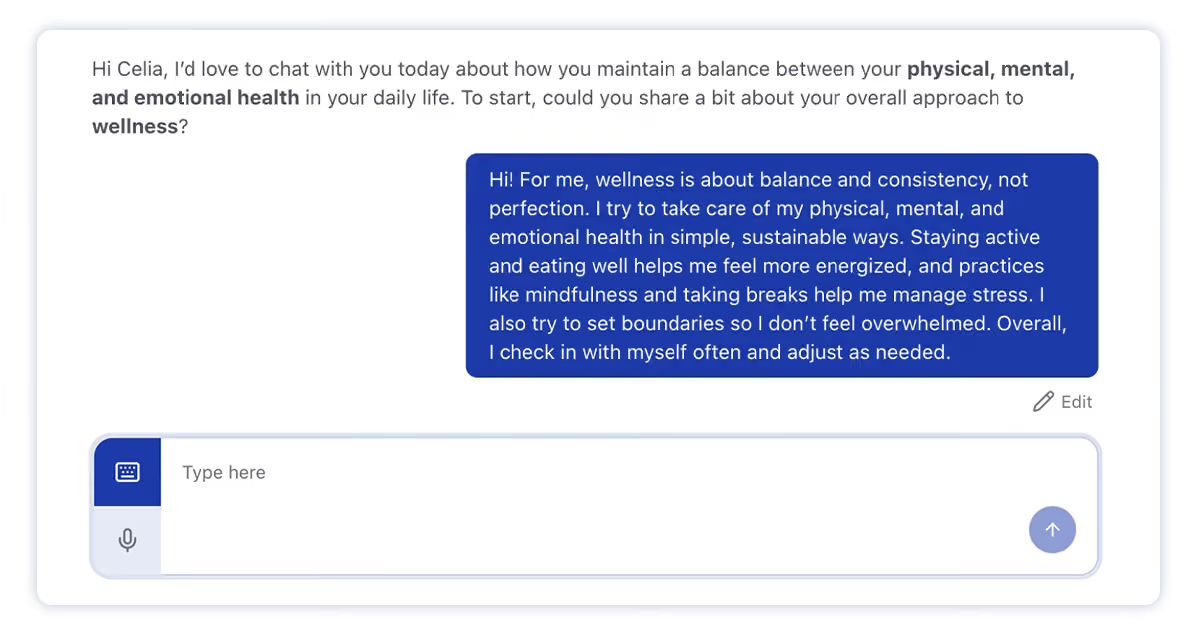
When designed properly, AI-moderated interviews turn a one-way prompt into a guided conversation. It's not a replacement for the work a human moderator does. Instead, think of it as a more adaptive format than the static text box qualitative research has traditionally relied on.
This playbook isn't here to argue that every study should include AI-moderated interviews. It's here to provide the information needed to decide when they can be used effectively, how to design them, what guardrails are necessary and how to make sense of the output. The researcher remains in charge throughout: the AI conducts conversations, but it doesn't decide what needs to be learned, what good responses look like or what the findings mean.
How to Use This Playbook
The playbook is organized around the questions that come up when planning a real project:
- Orientation: Should we be doing this at all?
- Governance: What guardrails do we need?
- Design: If yes, how do we set it up?
- Analysis and output: What do we do with what we get?
- Scale and iteration: How do we build this into practice?
It can be read end to end, but it doesn't have to be. For example:
- To figure out whether AI-moderated interviews belong in a next study or a team's toolkit, start with Orientation.
- To understand the approval and compliance requirements, jump to Governance.
- To get started with study setup, skip to Design and treat it as a starting point, not a checklist.
Chapter 1 | Orientation: When AI-Moderated Interviews Are (and Aren't) the Right Method
The first question shouldn't be "Can AI do this?" A better question is: "What kind of research problem are we trying to solve?" That starting point doesn't change just because AI has entered the picture. Ethnographies aren't used for everything. Surveys aren't always the answer. Co-creation has a time and place. AI-moderated interviews are no different and, like those other methods, they can strengthen a study when the fit is right.
What Is an AI-Moderated Interview? (And How It Differs from a Chatbot)
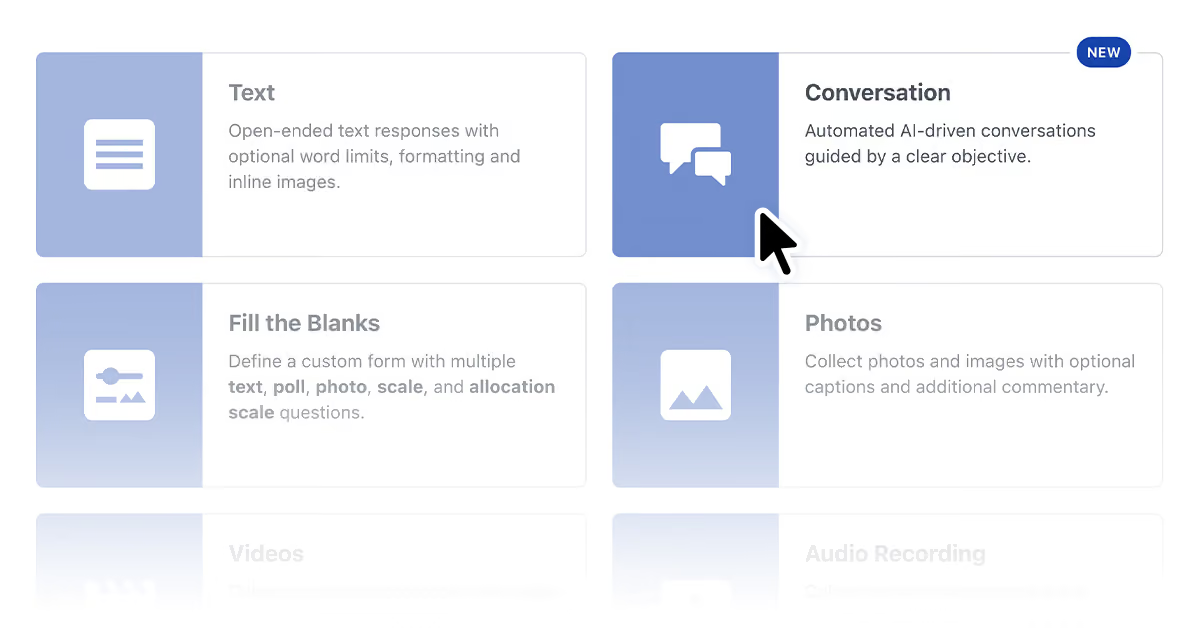
An AI-moderated interview is a one-on-one digital conversation between a participant and an AI moderator, guided by an objective that the researcher writes ahead of time to define what they need to learn. The AI opens the conversation, asks questions, probes on the participant's answers and ends the conversation when the objective has been sufficiently explored.
This isn't a chatbot following a rigid script or a survey dressed up in conversational language. The value of qualitative research has always been in the follow-up. A good moderator hears a vague answer and knows there's more underneath it. They hear "It was just easier" and ask "What specifically made it easier?" They notice a contradiction and gently stay with it. They know when to push and when to move on.
AI-moderated interviews bring some of that adaptive follow-up into a format that can run across more participants, more segments and more markets than a human moderator could ever cover in the same timeframe.
If interviews have three parts, setup, execution and analysis, the researcher still controls the setup (objective, scope, tone, boundaries, quality) and the analysis (interpretation, judgment and recommendations). The AI handles the execution.
When to Use AI-Moderated Interviews vs Other Qual Methods
AI-moderated interviews aren't always the right fit. The table below outlines where they add the most value and where other approaches are a better choice.
4 Questions to Test Fit Before You Commit
- Do we need to hear from more people than we could realistically interview in the time we have?
- Would adaptive probing produce better data than a static open end?
- Is the topic safe and appropriate for an AI-led conversation?
- Is it the right audience, or does this target need an in-person moderator?
If most answers point to yes, it's worth testing. If they point to the "use a different approach" column, hold off or pair AI moderation with another method.

Chapter 2 | Governance: The IT and Legal Questions About AI-Moderated Research That Can Stall Your Study
Most researchers would rather talk about study design than procurement. But inside a larger organization, the governance conversation isn't a formality, it's the gate. A study can be beautifully designed and still go nowhere if IT, legal or procurement can't get comfortable with the tool.
The good news: preparing early by anticipating the questions IT and legal will ask about your use of AI-moderated interviews makes the process significantly smoother.
Questions IT and Legal Will Ask About AI-Moderated Research
- Where does participant data go?
- Where is it stored?
- Is data encrypted in transit and at rest?
- Is participant data used to train external AI models?
- Which sub-processors have access to the data?
- What certifications or audits does the platform have?
- Can we control who has access inside our organization?
- What happens to the data when the project or contract ends?
- Can participants opt out of AI-enabled features where needed?
None of those questions are unreasonable. Don't make the IT reviewer become a research methodologist, give them the security answers in their language and keep the research rationale separate.
Will Participant Data Train an AI Model? Answer This Before Procurement Asks
If there's one AI-specific question that can stall a review, it's this: Will our participant data be used to train a model?
Have the answer ready before it's needed. In a research context, the expectation should be clear: participant data should stay protected inside the customer's environment and should not be used to train external models. If a vendor can't explain that plainly, that's a problem.
The same goes for data retention. It isn't enough to know that AI is involved. The team needs to know what data is sent, where it's processed, how long it's retained, who can access it and what contractual terms govern it.
Security Is Part of Research Quality
If participants are sharing detailed stories, category behaviors, customer experiences or sensitive opinions, the way that data is handled is part of the study's integrity. This matters even more for enterprise teams because AI-moderated interviews tend to increase the volume of qualitative data collected. More conversations means more evidence, but it also means more responsibility.
When a Human Steps In
One of the most practical guardrails is defining when a human review or follow-up should be triggered:
- A participant shows signs of distress. If the language suggests trauma, acute emotional difficulty or real discomfort, the AI should not keep pushing.
- The participant is confused. Repeated "I don't know" responses, contradictions or signs of confusion may mean the objective isn't clear enough.
- The respondent is strategically important. Executives, key accounts, expert respondents and high-value customers may warrant a human conversation.
- The topic carries legal, medical or financial risk. The AI should not provide advice or continue down a path that could create liability.
- Cultural nuance matters. If idioms, local context or translation ambiguity could change the meaning of a response, bring in human review.
Bias and Drift Checks
Before launch, review the objective for four common failure points:
- Leading language. "What did you appreciate about this experience?" assumes appreciation. "How did you find the experience?" is more neutral.
- Over-scoping. If the objective tries to answer six research questions, it will probably produce six shallow conversations. Narrow it.
- Market assumptions. Language that works in one country or audience may not transfer cleanly to another.
- Missing sensitivity flags. If the topic has emotional risk, the AI needs instructions for what to do when a participant signals discomfort.
Have someone outside the project read the objective before launch. Not a committee, just one person who can say "I think this is leading" or "I don't know what you mean by this." Researchers are good at seeing flaws in other people's guides. They're less good at seeing their own after staring at them for too long.
What to Include in an AI Research Procurement Brief
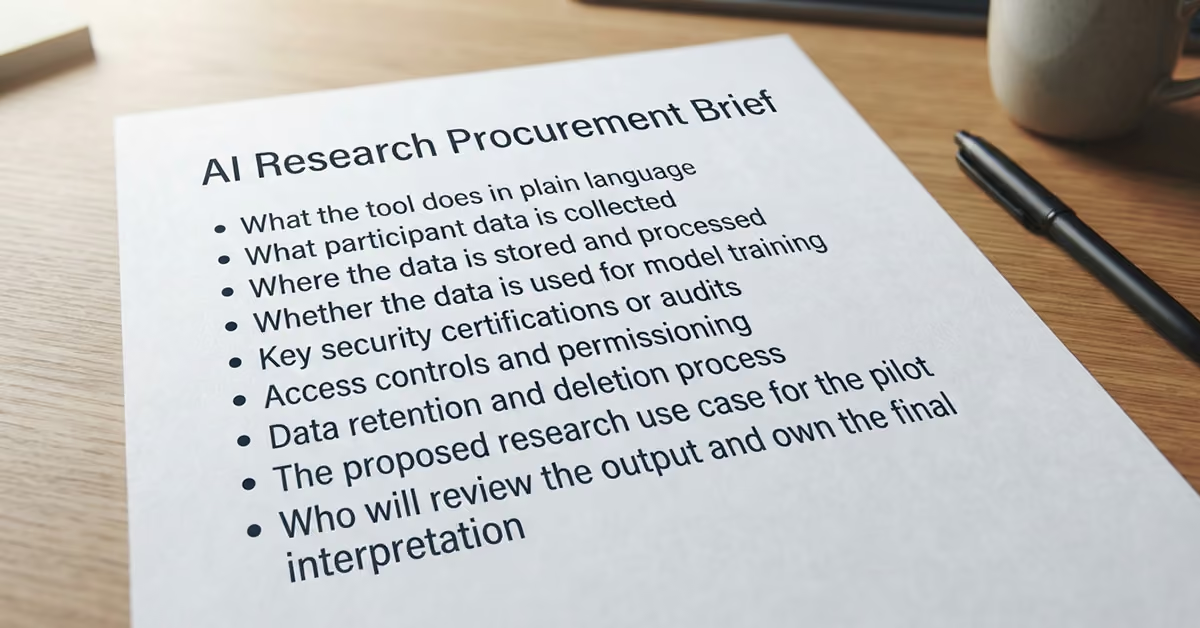
For organizations that need internal approval, a one-page brief can accelerate the process. It should include:
- What the tool does in plain language
- What participant data is collected
- Where the data is stored and processed
- Whether the data is used for model training
- Key security certifications or audits
- Access controls and permissioning
- Data retention and deletion process
- The proposed research use case for the pilot
- Who will review the output and own the final interpretation
That last point matters. It reassures stakeholders that the AI isn't making research decisions on its own, a researcher is accountable for the study, the interpretation and the recommendation.
Chapter 3 | Design: How to Write a Conversation Objective for AI-Moderated Interviews
The platform handles the conversation, but everything that makes the conversation useful, the objective, scope and parameters, comes from the researcher. This looks different from a traditional study or a typical online project. Rather than writing a discussion guide, the researcher writes an objective that the AI uses to determine what to ask, how to probe and when to stop.
The quality and detail of what gets written up front shapes everything that comes after. A vague objective creates vague conversations because the AI won't assume or fill in context that isn't there. An overly complex or crowded objective leads to shallow conversations because there's too much to explore without the conversation running too long for a respondent to engage with. There needs to be a balance and it's worth noting that this is where the researcher's expertise matters most. The technology isn't taking over. The control sits with the person designing the study.
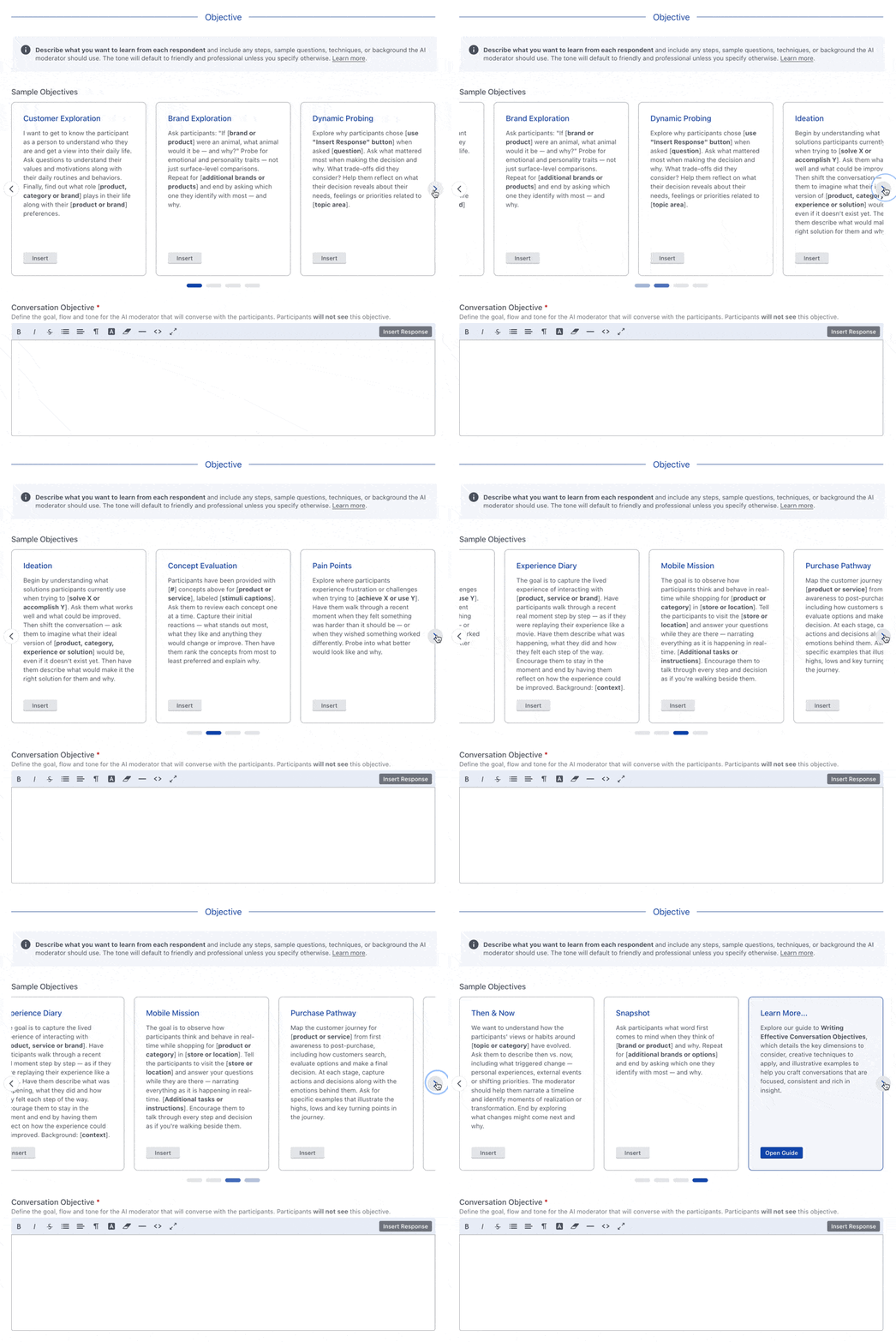
Don't panic about getting it right the first time. There's an opportunity to test, iterate and refine before going live. Some platforms, like Recollective, have built-in templates that provide a starting point for writing objectives or inspiration for creative ways to use the tool.
Start With the Conversation Objective
In traditional IDIs, a moderator drafts a discussion guide that lays out the flow of the conversation, the questions to ask and the areas to explore. A good moderator uses it as a guide, not a script.
In AI-moderated interviews, the conversation objective plays a similar role. It tells the AI what the conversation needs to accomplish, what context matters, what areas need exploring, what to avoid and what a useful answer would look like.
The shift is in how the materials get drafted. Rather than writing questions, define outcomes. Don't tell the AI to ask these ten questions in order. Tell the AI that by the end of the conversation, it needs to understand the following.
The 6 Elements Every AI Interview Objective Needs
A good objective doesn't have to be long or complex. It does need to be clear and complete.
Examples
Here's a simple example. The study is testing three new product concepts for a coffee brand expanding into ready-to-drink options.
Weak objective:
Ask participants what they think about the concepts and which one they like best. Probe for likes, dislikes and any suggestions they have to make the concept even better.
This isn't wrong, but it's worded like a note a moderator has written to themselves. For a human, that's enough to run an IDI. For an AI-moderated conversation, it's too vague, it lacks context on the background, the audience, the decision at stake, the comparison that matters or what type of response to look for.
Stronger objective:
The participant reviewed three new product concepts for a coffee brand expanding into ready-to-drink options. The goal of the conversation is to understand which concept is the most appealing, which one they would actually buy and what specific elements, the name, the description, the packaging or the brand fit, are driving that reaction. Begin by confirming which concept the participant likes the most. Then explore why that concept stood out compared with the other two. Probe for specific words, ideas or visual elements that impacted their decision. If the participant gives a general answer like "it just sounded better" or "the packaging looked nicer," ask what specifically created that reaction. Avoid trying to sell or defend any concept. The conversation is complete when we understand what concept resonated with the participant the most, why they did not choose the other two, what concerns remain and what would make the chosen concept even better.
The second version gives the AI something to work with. It also gives the researcher something to evaluate against, if the transcript doesn't explain the choice, why the other two didn't land, what concerns remain and what would make the concept stronger, the conversation didn't meet the objective.
Think About the Participant Experience
With timelines driving urgency, it's easy to forget to step back and consider what participants are actually being asked to do. If the participant experience gets overlooked, the result is the same as any other poorly scoped study: fatigue, drop-off and weaker response quality.
AI-moderated conversations are no different. Just because AI handles the moderation doesn't mean the conversations have to be impersonal or feel like a series of choppy questions and answers. The conversation should feel clear, respectful and easy to engage with. The participant should know what they're being asked to do, how long it will take and that there are no right or wrong answers.
A good introduction sets the tone. Something like: "I'm going to ask you a few questions about the concepts you just reviewed. I'm interested in your honest reaction, including anything that felt unclear or didn't work for you." That kind of framing gives people permission to be candid.
Preview, Iterate and Pilot
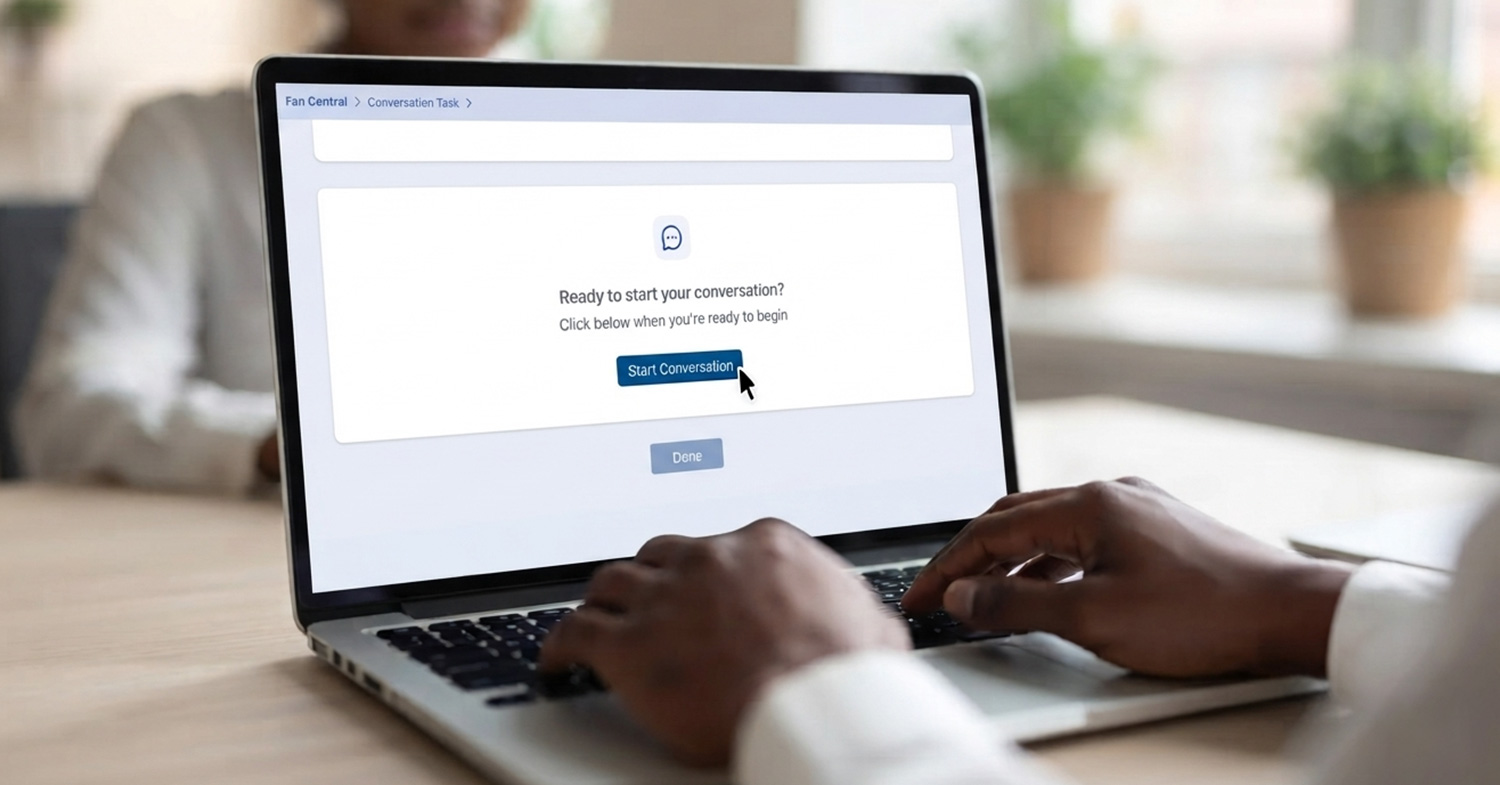
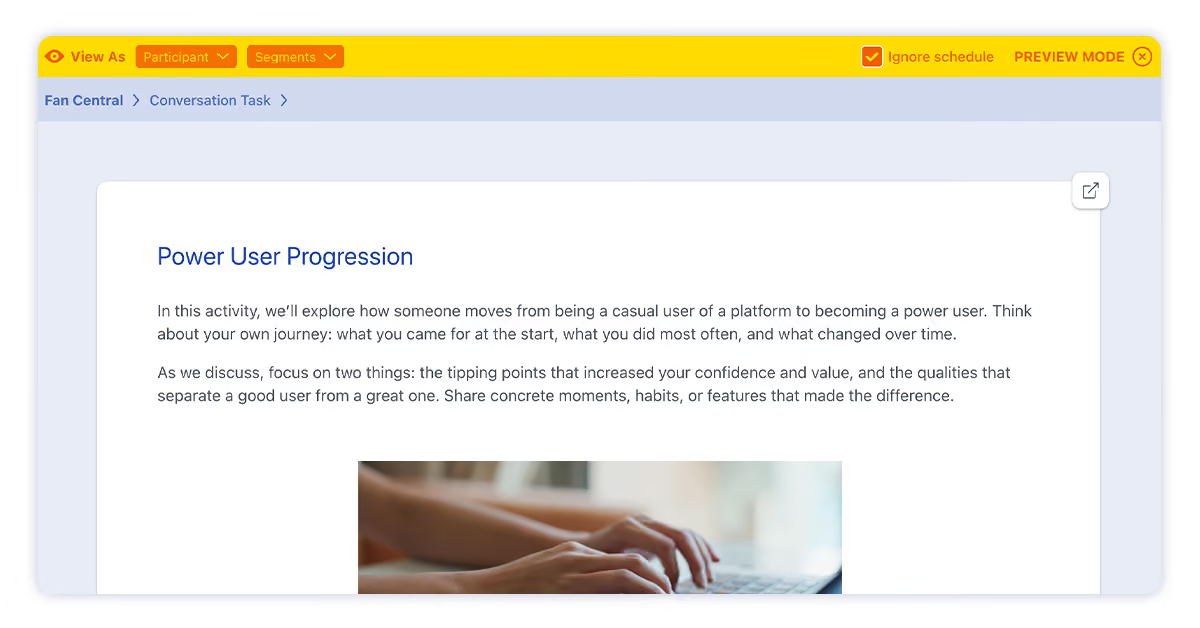
Once the conversation objective and introduction are drafted, the next step is testing them. Within Recollective, the Conversation Task can be previewed before participants ever get invited to the study. Preview mode shows the introduction and allows a full test conversation to assess whether the AI moderator is performing as intended. This can be repeated as many times as needed. Running at least three full conversations before settling on the objective is recommended.
When previewing, ask:
- Is the introduction clear?
- Will participants understand the task?
- Did the AI probe the right things?
- Did the conversation stay inside the intended scope?
- Would a recommendation feel comfortable based on the information the conversation collected?
If the answer is no to any of these, adjust the introduction or conversation objective and preview again. Iteration is part of the process, no matter how well thought out the objective is, it won't be perfect on the first try. That's why previewing before launch is essential. This is where the objective gets stress-tested and fine-tuned.
How Many Participants Do You Need for AI-Moderated Interviews?
AI-moderated interviews make larger sample sizes feasible, but "more" doesn't always mean better. The task is still qualitative and the goal is thematic saturation, not statistical significance.
General guidance: for a focused discovery study in a single segment, 15 to 25 participants is typically enough to reach saturation on core themes. For multi-segment studies, treat each segment as its own saturation question, 15 to 20 per segment depending on the complexity of what's being explored.
How Long Should an AI-Moderated Interview Last?
Duration is a function of scope. The AI moderator keeps the conversation going until the objective is met, so the length is shaped by what it's asked to accomplish. A tightly scoped objective (e.g. understanding reactions to a single concept) will naturally wrap up in 15 to 25 minutes. A broader objective that covers multiple topics or asks for comparisons will run closer to 30 to 45 minutes.
This is worth paying attention to during previews. If test conversations consistently run long, the objective is probably trying to cover too much.
Chapter 4 | Analysis: Turning AI Interview Transcripts into Findings
The transcripts start coming in. This is where the researcher steps back in.
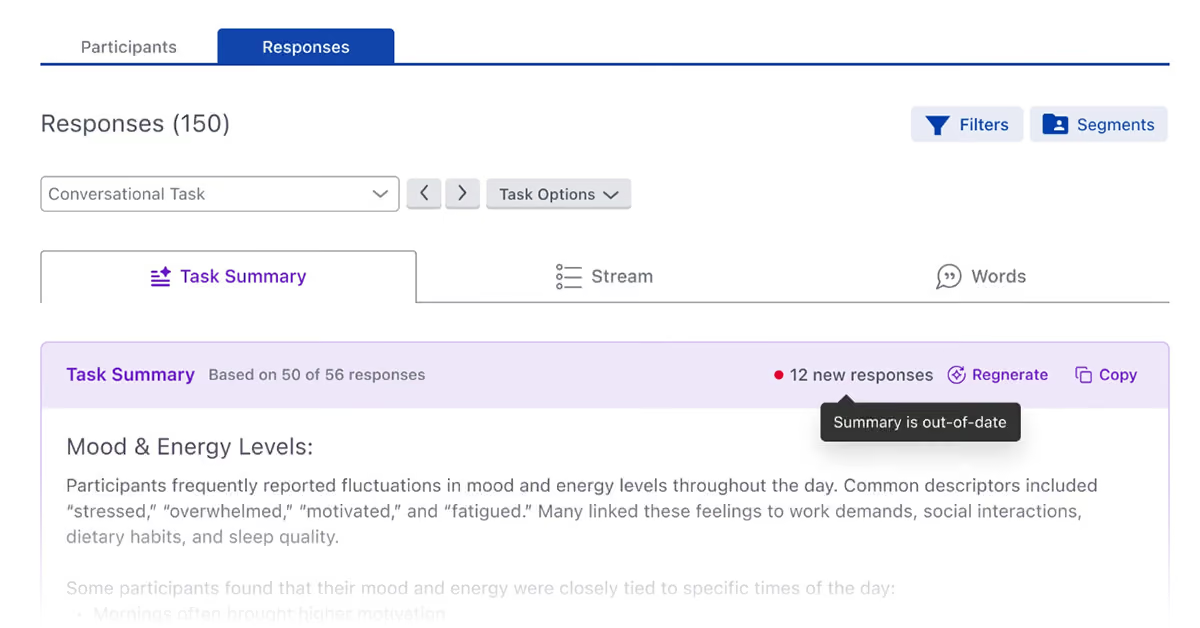
The AI handles the execution of the conversation and helps organize the output, but the interpretation, judgment and recommendations belong to the researcher. The output will be more organized from the start; instead of hours of video, a stack of notes and raw transcripts, the starting point is structured summaries, searchable transcripts and output already organized around the objective. Even with more participants and more transcripts, it's more manageable than it's ever been but it still needs a researcher to synthesize everything and make recommendations.
Why AI Summaries Aren't the Final Deliverable
AI-generated summaries are useful, but they aren't the final deliverable. Think of them as a first pass that helps to spot themes and trends, but they shouldn't be copied straight into a report without checking the evidence underneath. If a summary says participants felt a certain way about a concept, review the verbatim transcript that supports the finding. What did they actually say?
That's the difference between a theme and an insight. A theme says "Participants valued ease of use." An insight says "Ease of use mattered because participants were worried they'd make a mistake during setup and embarrass themselves in front of their team."
Find Friction
One of the researcher's greatest assets in analysis is the ability to spot friction. Look for places where participants:
- Say one thing but behave another way
- Choose an option for a reason different from the one they first gave
- Use emotional language unexpectedly
- Contradict themselves in a way that reveals complexity
- Struggle to explain something that clearly matters to them
- Reject a concept for a reason the team didn't anticipate
The best findings often don't live in the cleanest pattern, but in the thing that doesn't quite fit.

How to Know If Your AI-Moderated Findings Are Reliable
Stakeholders often ask some version of "How do we know the information is reliable?" This question will come up even more when the method is new.
Confidence is built in three ways:
- Evidence: Every major finding should be traceable back to transcript excerpts or participant-level responses.
- Saturation: The team should be able to identify when new conversations stopped adding meaningfully new themes.
- Exceptions: The team should be able to explain who didn't fit the pattern and why that matters.
AI-moderated interviews can actually help with stakeholder trust here. When someone challenges a finding, the specific conversation that supports it is right there.
How Does This Fit Into the Larger Study?
AI-moderated conversations are usually one part of a broader study. When they are, use the AI-generated summaries and transcripts in conjunction with all the other data being collected to get the full picture.
To make sure everything is examined from every angle, follow a process such as:
- Review the AI-generated summaries to identify themes
- Pull transcript excerpts that support those themes
- Look for participants or responses that contradict or complicate the theme
- Compare the theme against any ratings, choices or behavioral tasks in the study
- Decide whether the theme is strong enough to report, needs nuance or should be dropped
Build Outputs Around Decisions
Start with the decision the research needs to support. Then organize the output around what the team needs to know to make that decision.
Use Participant Language Carefully
AI-moderated interviews produce a lot of participant verbatim. The trick is not to overuse it. Use quotes when they do real work, a quote should clarify, add texture or make a finding more concrete. The power of a quote is often the way the participant said it, so be careful not to paraphrase.
What to Include in the Final Deliverable
For most studies, include:
- A short method note explaining how AI-moderated interviews were used
- The sample and fielding period
- The conversation objective or a summarized version of it
- Main findings organized around the business decision
- Participant evidence for each finding
- Meaningful differences by segment or market
- Outliers or exceptions
- Clear recommendations or next-step implications
The method note doesn't need to over-explain the technology. It should simply make clear that the interviews were AI-moderated, guided by a researcher-defined objective and reviewed by the research team.
Chapter 5 | Scale and Iteration: A Maturity Path for AI-Moderated Research Programs
The first AI-moderated study will teach your team a lot and the real value comes when the team starts building on that. Each subsequent study gets easier and the applications for AI-moderated interviews expand naturally.
It takes a few projects for a team to learn what to write, what to review and what to adjust. Like any method, the quality improves when researchers build a shared way of working instead of starting from scratch every time.
Start With a Real Pilot
The best first pilot isn't a fake project or a practice run on a demo site with internal participants. Pick a real study or a real research question and make it part of the approach.
A good pilot has:
- A focused objective
- A clear audience
- A sample size that's manageable but meaningful
- A timeline where speed actually matters
- A stakeholder who needs the answer
- A researcher who will personally read transcripts before making any recommendations
For a first study, 15 strong conversations are better than 75 messy ones. The goal isn't proving a lot of data can be collected, it's proving that useful data can be collected.

Measure the Pilot Honestly
After the pilot, run a short post-mortem and capture:
- How long it took from brief to findings
- How many participants completed the conversation
- How many transcripts produced usable evidence
- Where the AI probed well
- Where the AI missed something
- How much researcher time was required (and saved)
- How stakeholders reacted to the findings
- What would change before running a similar project again
That information can then be compared against the approach that would have been used otherwise.
How to Build the Internal Business Case for AI-Moderated Interviews
One of the best ways to make the case internally is to lead with outcomes rather than approach. What did AI-moderated interviews accomplish?
A 5-Project Roadmap for Rolling Out AI-Moderated Interviews
- Project 1: Run a focused pilot on a real question. Read everything. Tune aggressively.
- Projects 2-3: Repeat in adjacent use cases. Start documenting objective patterns and common tweaks.
- Projects 4-5: Introduce multi-segment or multi-market work once the team has confidence in objective design.
- After six months: Review the library, identify repeatable templates and define where AI moderation makes the most sense to expand to next.
That path is manageable. It also respects the fact that researchers need to trust a method before they build it into their work.
Build a Small Objective Library
Every moderator has their go-to icebreaker question for a focus group or their favorite "getting to know you" exercise for an online community. AI-moderated conversations shouldn't be any different. When a conversation objective works and is broadly applicable, save it.
The library doesn't have to be fancy. A shared document works, or with a platform like Recollective, objectives can be copied from study to study. For each saved objective, include a quick note: what worked, what got tweaked, what kind of sample it was used with and how confident the team felt in the output. That small amount of documentation turns one good project into a repeatable practice.
Closing Thoughts
AI-moderated interviews don't make qualitative research less human. They give researchers more room to focus on the parts of the work that need a human most: writing sharper objectives, sitting with a transcript until the meaning becomes clear and deciding what a finding means for the business.
The method is still new enough that skepticism is warranted. Skepticism isn't resistance, it's quality control. The best way to approach it is with curiosity, structure and a willingness to read the output honestly. Start small. Use a real question. Write a clear objective. Read the transcripts. Tune what didn't work, then decide where it belongs in practice.
For questions about how AI-moderated interviews can be integrated into a research program, contact the Recollective team.
FAQ: Quick Answers About AI-Moderated Interviews
Straight answers to the questions researchers, stakeholders and reviewers ask most often. Each one is pulled directly from the guidance above.
Toolkit Appendix
Use these as working tools. They aren't meant to replace judgment, they're meant to make the first few projects easier to set up and easier to review.
Fit Check
Use AI-moderated interviews when:
- Qualitative depth is needed across more participants than live moderation can support
- The research question is focused enough to write a clear objective
- Adaptive probing would improve the quality of open-ended responses
- The topic is appropriate for an AI-led conversation
- A researcher will review transcripts and own the interpretation
Use human moderation when:
- The topic is highly sensitive or emotionally charged
- Relationship-building is part of the method
- Non-verbal behavior or physical product interaction needs to be observed
- The respondent is a high-value expert or executive
- The research objective is still too undefined to guide a useful conversation
Objective Template
This participant is [audience/context]. The goal of this conversation is to understand [specific research goal]. Focus on [in-scope topics] and avoid [out-of-scope topics]. Keep the tone [tone/stance]. Probe when the participant [specific triggers: gives a vague answer, mentions a trade-off, expresses emotion, contradicts an earlier answer]. A useful answer should include [evidence requirement: specific example, comparison, motivation, decision moment]. The conversation is complete when we understand [endpoint].