

Insight communities are no longer “one size fits all.” In 2026, teams use communities for everything from fast concept checks to always-on feedback loops that keep customer voice close to everyday decisions.
This guide updates our original community-type breakdown with a more modern, decision-first framework, plus practical tips for resourcing, engagement, governance and how AI can help you scale depth without sacrificing quality.
Key takeaways
- The “right” insight community matches your decision timeline, learning goals and team capacity
- Pop-up (short-term) communities are best for focused questions and fast turnaround
- Program-based communities work well for multi-topic learning over a defined period (weeks to a few months)
- Long-term and always-on communities unlock longitudinal insight, but need stronger governance and programming
- AI can reduce friction for participants and speed up synthesis, especially in large or ongoing communities
Start with the decision you need to make
Before you choose a community type, define three things:
- Decision clock: Are you making a decision in days, weeks or across quarters?
- Learning arc: Do you need a one-time answer, iterative learning or change over time?
- Operating model: Who will program activities, manage stakeholders and keep members engaged?
If you only do one thing, do this: write a one-sentence “job” for the community, for example:
- “Help us pressure-test positioning and creative every month.”
- “Keep us close to customer needs across the full journey.”
- “Give us fast access to feedback when priorities change.”
That sentence will point you to the right format.
The 4 most common insight community formats
1) Pop-up community (short-term)
Best for: a single business question, quick exploration, concept or message feedback, early discovery
Typical duration: a few days to ~4 weeks
What success looks like: clear answers, decision-ready themes, strong participation rates
Pop-up communities are focused and finite. They work especially well when you need depth but still want speed. Because the time window is short, members stay energized and researchers can move quickly from fieldwork to synthesis.
Common pitfall: trying to do “just one more topic” and overloading participants.
2) Program-based community (multi-week, defined scope)
Best for: sequential learning (discover → test → refine), journey stages, innovation funnels
Typical duration: ~6–16 weeks (sometimes longer)
What success looks like: momentum, learning that builds from wave to wave, stakeholder alignment
This format is a great middle ground: long enough to iterate, short enough to stay tightly managed. It’s also a strong option when multiple teams want answers, but you need a clear operating plan.
Common pitfall: unclear prioritization when many stakeholders contribute questions.
3) Long-term community (ongoing, planned renewal)
Best for: deeper exploration, segmentation learning, continuous discovery, longitudinal understanding
Typical duration: ~6–12+ months
What success looks like: sustained engagement, repeatable learning cycles, measurable internal adoption
Long-term communities shine when you need repeated touchpoints with the same people over time. They can become a strategic research asset, especially when you plan a rhythm of programming and reporting that makes insights easy to use.
Common pitfall: underestimating the time it takes to keep the experience fresh.
4) Always-on community (no fixed end date)
Best for: on-demand insight, ongoing listening, continuous improvement across functions
Typical duration: ongoing
What success looks like: reliable “insight ops” cadence, fast turnaround, strong governance
Always-on communities are powerful because they make customer voice accessible when priorities shift. They’re also the most operationally demanding. The best always-on communities feel less like a survey queue and more like a well-run member experience with clear expectations, variety and appreciation.
Common pitfall: “set it and forget it” design that leads to engagement drop-off.
Quick comparison table: which community type fits best?
A practical checklist to help you choose the right format
Long-term or always-on: confirm that you can resource it
Longer communities succeed when you plan for three realities:
Programming is a product
Members need variety. A simple rotation helps:
- quick pulses (polls, short prompts)
- deeper tasks (journals, media uploads, concept review)
- collaboration (discussion topics, co-creation)
- live touchpoints (video sessions as needed)
Stakeholder demand will grow
When people learn the community exists, requests increase. Decide early:
- who can request work
- how you prioritize
- what “fast” means (and what it doesn’t)
Reporting needs a repeatable format
Long-term value comes from consistency. Create a lightweight monthly or quarterly rhythm:
- what we learned
- what changed
- what we recommend
- what evidence supports it (quotes, clips, artifacts)
How AI changes what’s possible in insight communities
Modern communities generate a lot of unstructured data. That’s a good thing, as long as your team can keep up.
A few practical ways teams use AI in communities today:
Scale depth without scaling meetings
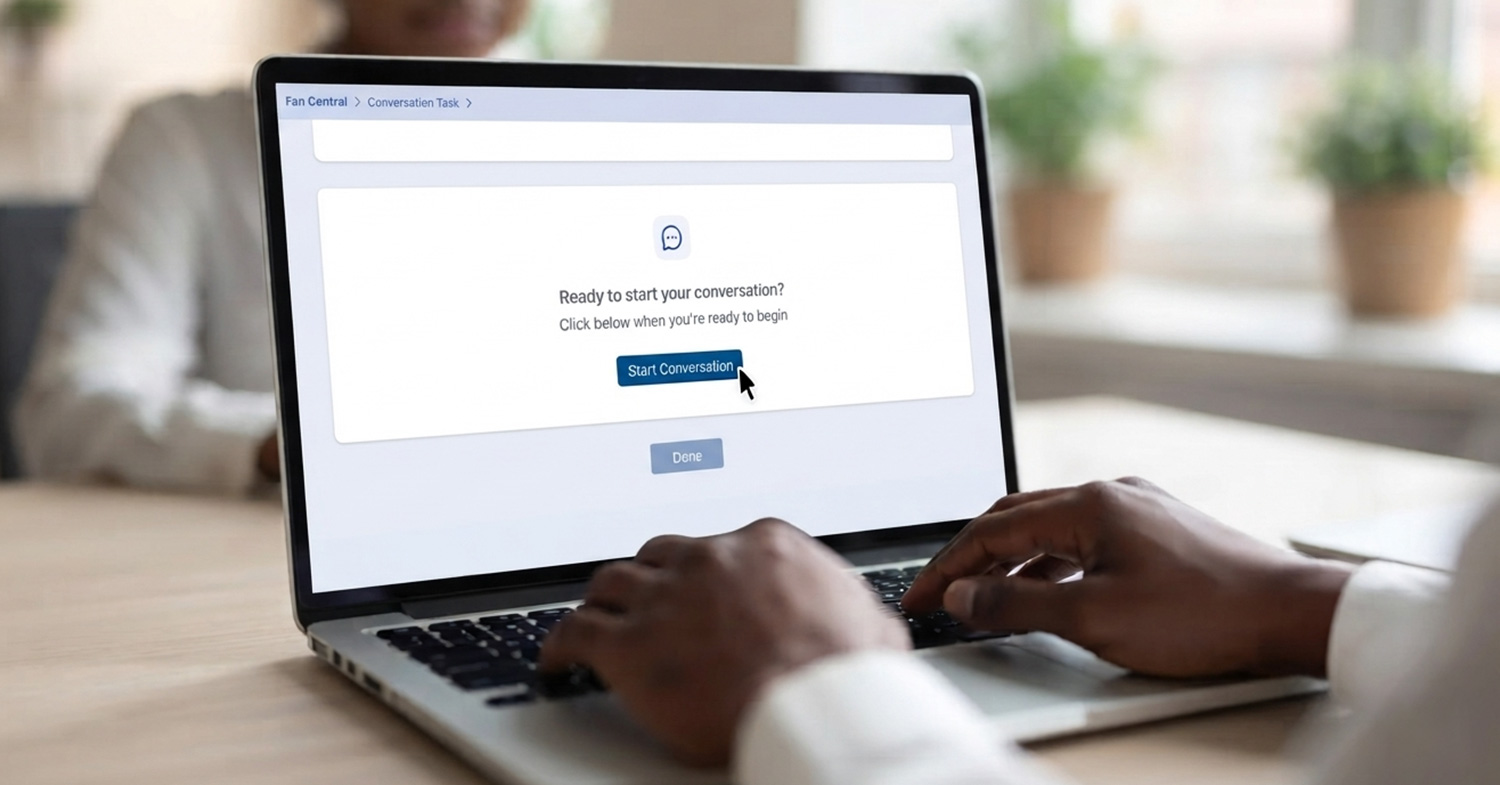
AI-moderated 1:1 conversations can help you collect rich qualitative feedback from many participants at once, especially when you need depth across segments or markets.
Reduce participant friction
When participants can respond naturally (including by voice), they tend to share more context, more detail and fewer “one-line” answers.
Get to synthesis faster in ongoing work
In long-term communities, the hardest part is often sorting through everything that was said across weeks, topics and threads. AI-assisted analysis can help teams move from “we have data” to “we have answers” faster, while keeping evidence close at hand for validation.
Branded vs blind communities: a quick guide
Branded communities are best when you want:
- stronger relationship building
- direct CX and product collaboration
- a clear member identity and mission
Blind communities are best when you need:
- less brand influence on responses
- sensitive topics or competitive work
- more “neutral space” perception
Many teams use a hybrid approach: branded for relationship work, blind for evaluation and testing.
Incentives and engagement: keep the value exchange clear
Incentives work best when they’re:
- predictable: members know what to expect
- fair: effort matches reward
- supported by intrinsic value: members feel heard and see impact
Engagement improves when you show receipts. Close the loop with members:
- “Here’s what we learned”
- “Here’s what we changed”
- “Here’s what’s next”
That one habit can do more for retention than any single tactic.
Governance and trust: don’t treat this as an afterthought
Communities depend on trust. Build it with:
- clear consent and privacy expectations
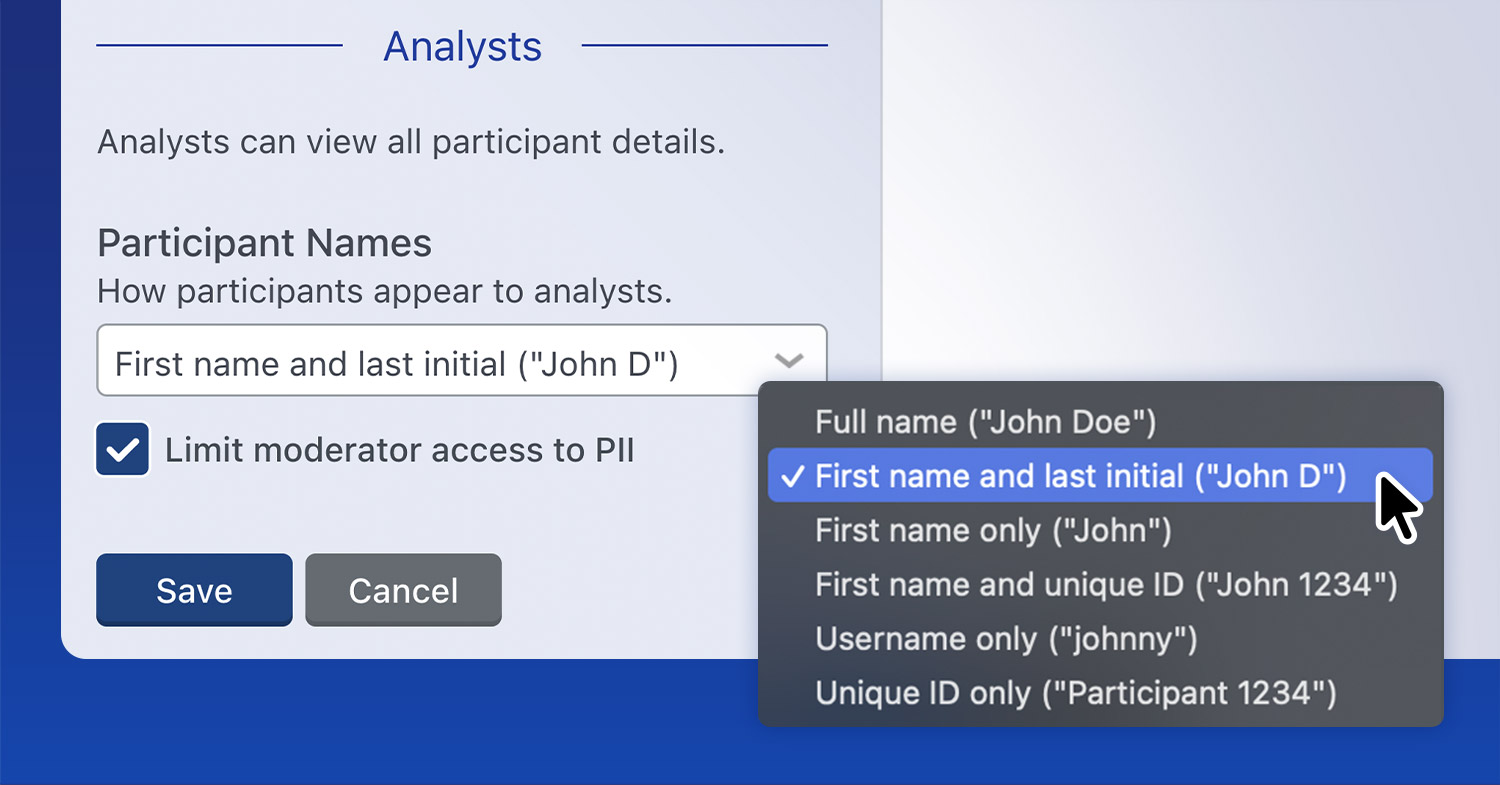
- thoughtful handling of personal data
- secure access and participant authentication
- practical standards aligned to industry codes
When communities span markets or regulated categories, a strong compliance posture is not just risk management. It’s a participation enabler.
Closing: a simple next step
If you’re deciding between a pop-up, program-based, long-term or always-on community, start by writing your community’s “job” sentence and mapping it to the table above.
If you want a second set of eyes, Recollective’s team can help you pressure-test the format, resourcing and launch plan so your community is designed to deliver value from day one.





.svg)